

Agentic AI Weekly | Berkeley RDI | September 10, 2025
New Agentic AI MOOC starts 9/15, DeepSeek preps a new agent, and OpenAI's new chip

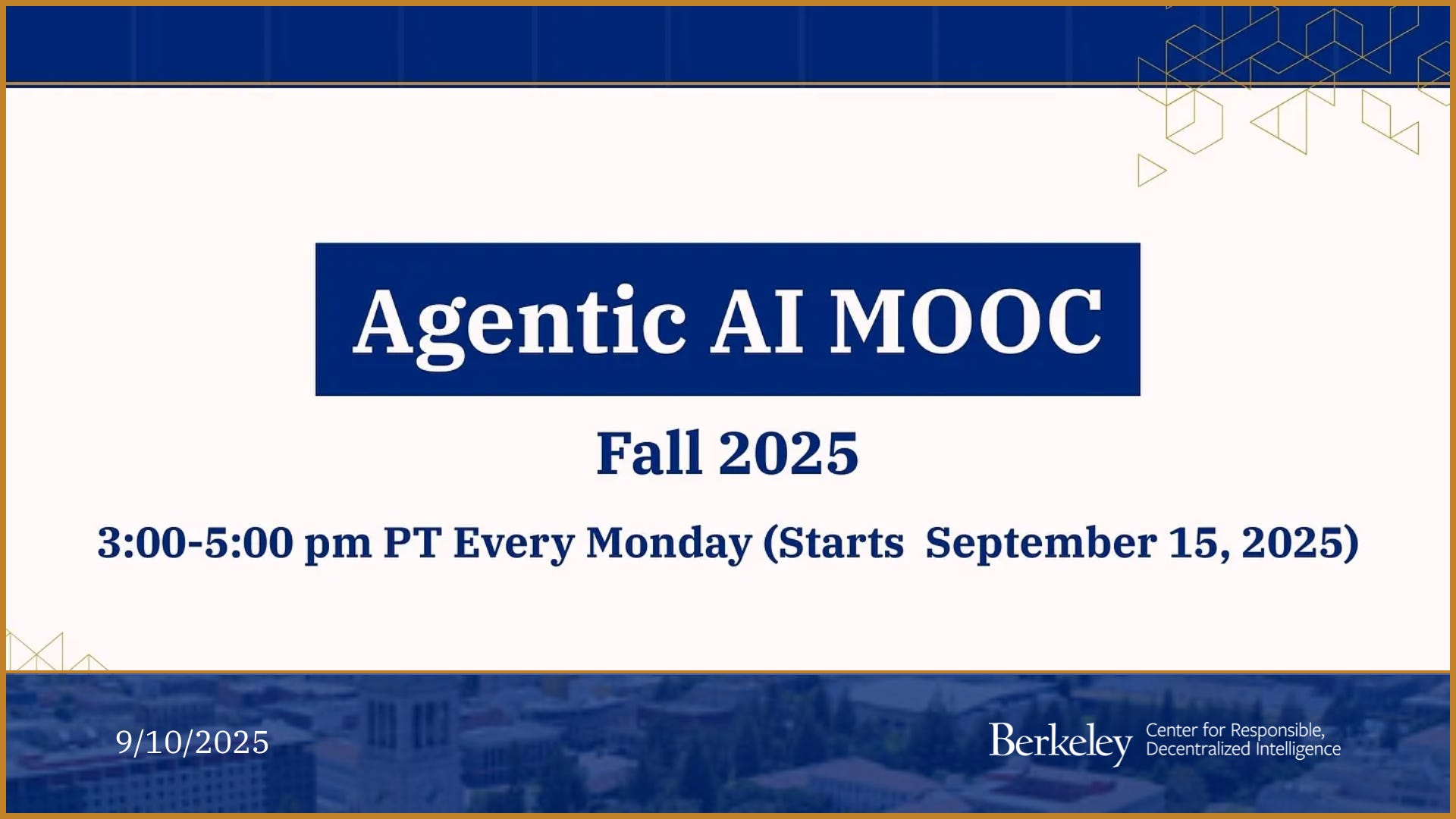

We are thrilled to invite you to our upcoming Agentic AI MOOC, starting on September 15th! Join our community of over 25,000 eager learners and gain an understanding of the foundations of Agentic AI for both the present and the future.
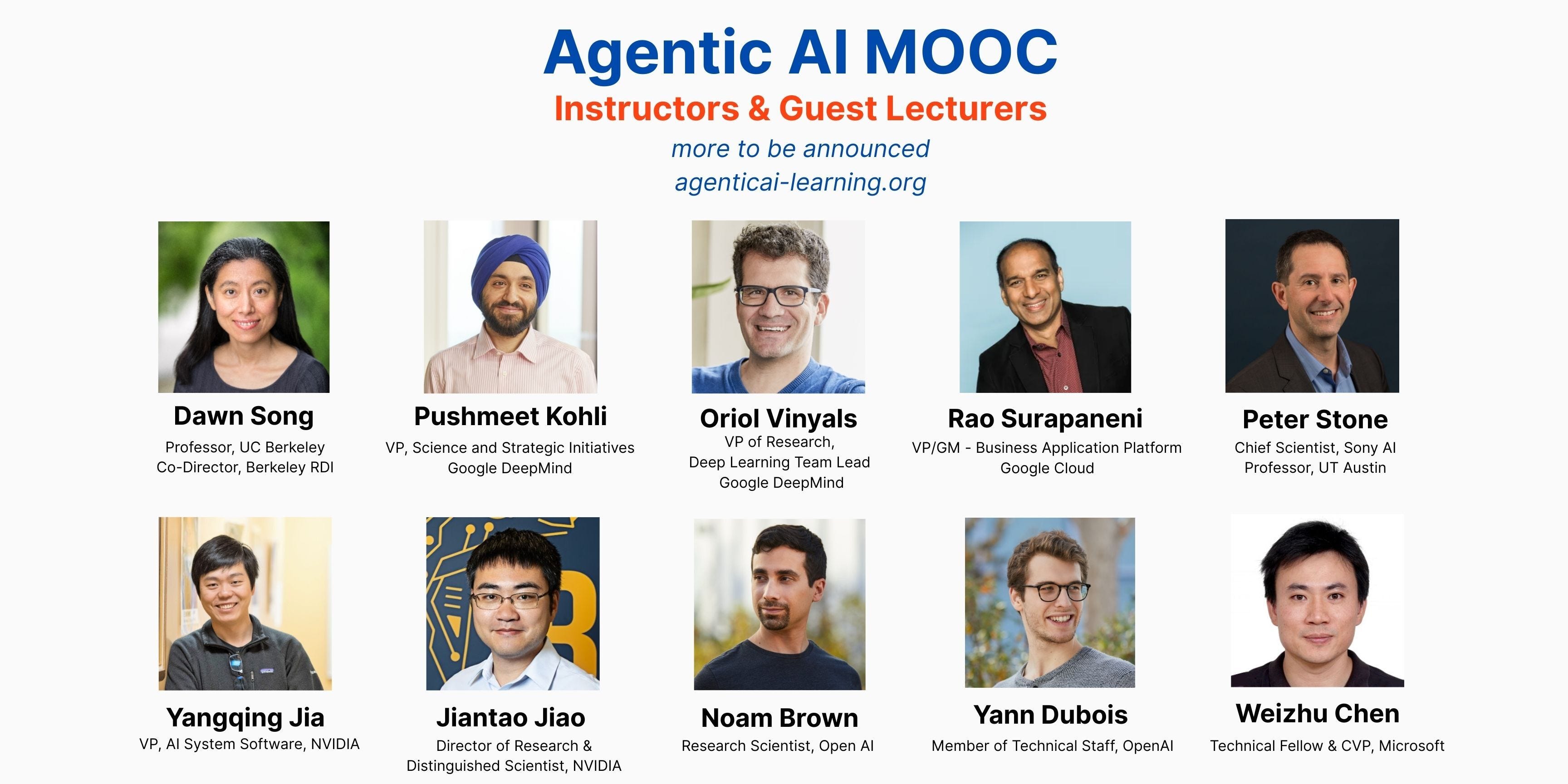
What You’ll Learn
Essential Concepts: Foundations of LLMs, reasoning, planning, agentic frameworks, infrastructure, etc.
Hands-On Applications: Explore real-world use cases in code generation, robotics, web automation, scientific discovery, etc.
Course Details
Lecture Time: Mondays, 3-5 pm PT (starting September 15, 2025)
Format: Online, open to a global audience
The full syllabus will be announced soon—stay tuned!
Sign up now and be part of the next generation of AI innovators:

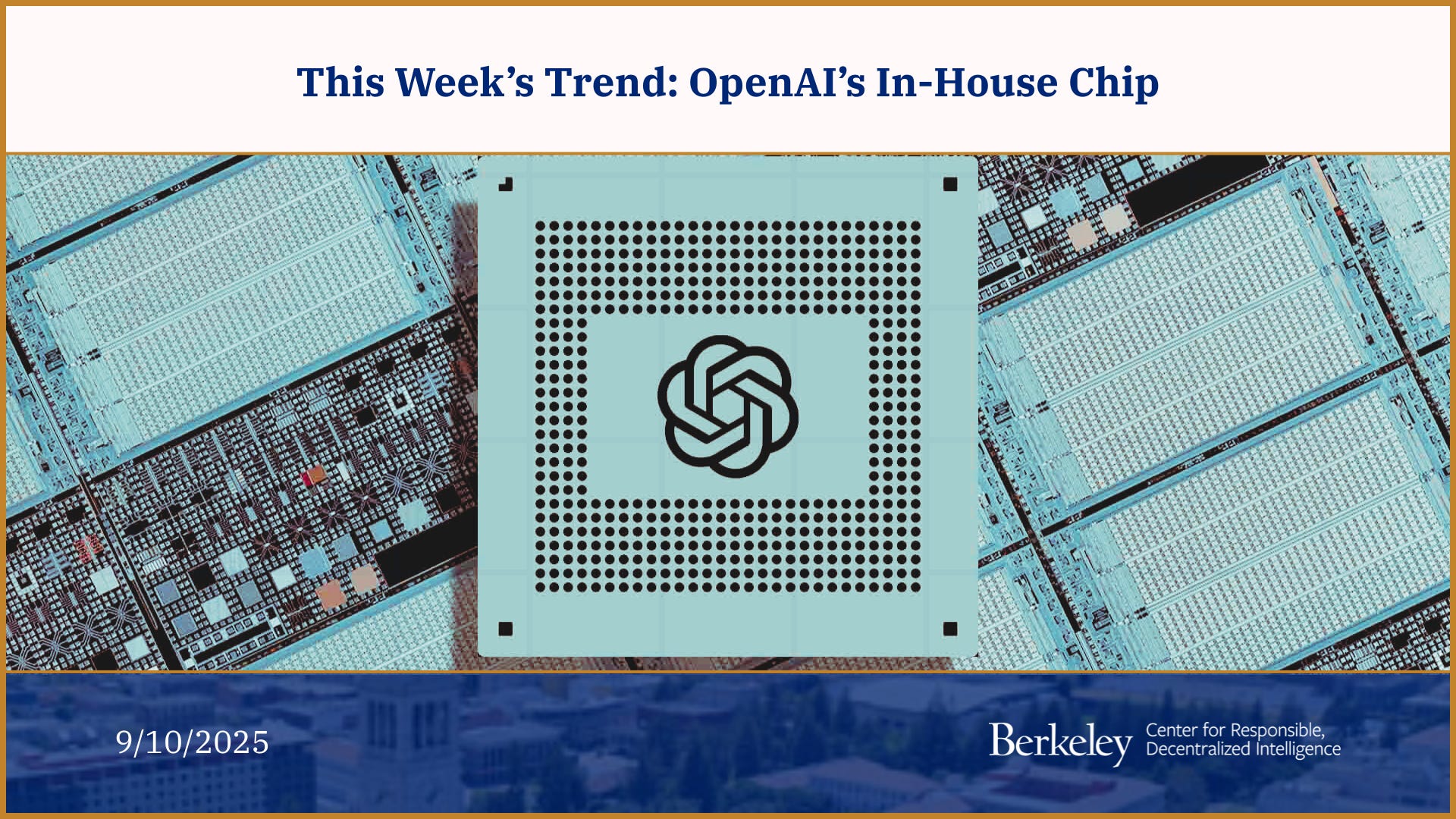
This Week’s Trend: OpenAI’s In-House Chip
OpenAI has long been rumored to be developing an AI chip for internal use only, and recent reports state that it is set to launch in 2026.
The chip (potentially a set of chips), developed in partnership with Broadcom, is reportedly a key part of the startup’s push to reduce its heavy reliance on Nvidia and find a path toward cost reduction as well.
Key Factors in OpenAI’s Broadcom Partnership:
💰 OpenAI is spending more than $10 billion with Broadcom in infrastructure and development
📊 An estimated 90% of OpenAI’s compute for model training relies on Nvidia GPUs
🧠 New chips aim to supply millions of AI accelerators for internal training and inference
💭 Follows others, such as Meta, Google, and Amazon, who have all developed custom chips for AI workloads in an effort to diversify from Nvidia’s offerings
Success would give OpenAI much more control over its training and inference costs, but it could be challenging for the company to maintain pace with Nvidia’s current roadmap and speed of innovation.
Regardless, other players (Anthropic, Cohere, etc.) may look to follow the company’s lead if the new chip leads to big gains in 2026.
Other Trends This Week:
DeepSeek is reportedly preparing a multimodal AI agent that can rival OpenAI’s offerings, with the launch set for the end of this year; DeepSeek has made most of its impact via open models to this point, though there’s no confirmation that this new agent will be open source.
DeepL, a German startup that has historically focused on AI-powered translation services, has launched an enterprise AI agent that automates “repetitive, time-intensive tasks” across various workloads, putting it in direct competition with the enterprise market.
French startup Mistral just raised a $2B Series C, valuing the company at $11.7B. Crucially, the round was led by advanced chipmaking equipment manufacturer ASML, making it the top shareholder in the company, which is now the most valuable AI startup in all of Europe.
The Browser Company, which owns Dia, an agentic browser that automates tasks for users, was recently acquired by productivity startup Atlassian for $610M. Atlassian reportedly plans to create a browser that uses AI to integrate with SaaS web apps in real-time, though there are few details on its exact plans as of right now.
Alibaba has announced its new Qwen3-Max-Preview (Instruct) model, which the company calls its “biggest model yet” at over 1 trillion parameters. Preliminary benchmarks show it outperforming previous models like Kimi K2 and Deepseek V3.1 by significant amounts, though more testing is required to make a full comparison.
Qualcomm and Google announced a partnership on Monday to bring agentic AI systems — specifically Google’s Automotive AI Agent — to the automobile manufacturing industry, enabling car manufacturers to integrate AI agents into their user interfaces.
CoreWeave, a company that provides companies like Google and OpenAI with cloud server space, has acquired OpenPipe, a Y-Combinator-backed startup that helps enterprises train custom AI agents via reinforcement learning.
The country of Switzerland has released a new AI model trained on public data, with fully open weights. Switzerland says that this was to “set a new baseline for trustworthy and globally relevant AI models” and is comparable to Llama 3, the model released by Meta in 2024.
Microsoft and the U.S. General Services Administration (GSA) have struck a major OneGov agreement to speed AI adoption across federal agencies. The deal offers free Microsoft 365 Copilot for up to a year, steep discounts on Microsoft cloud and security tools, and $20M in support services, projected to save agencies over $6 billion in three years while reinforcing security and modernization goals.
Google released EmbeddingGemma, a compact, open-source embedding model optimized for on-device use. It supports customizable output dimensions, runs efficiently offline with minimal RAM, and integrates seamlessly with tools like LangChain, LlamaIndex, and transformers.js for developers building mobile-ready AI applications.
A new paper from OpenAI argues that large language models don’t invent facts because of some mysterious flaw, but because of how they’re trained and tested. Current benchmarks reward models for making confident guesses rather than admitting uncertainty, teaching them to sound sure even when they’re wrong.

Don't miss the developments shaping Agentic AI. Subscribe for weekly coverage of groundbreaking research, emerging trends, and critical insights across Agentic AI and the broader AI landscape.
